Husband's card debt, and collectors say spouses share property so you must pay? Each spouse pays their own debts
No agreed regime? Spouses own and owe separately (Civil Code 1017, 1023). Exceptions: you are guarantor, or household-expense debts. Plus handling harassment.
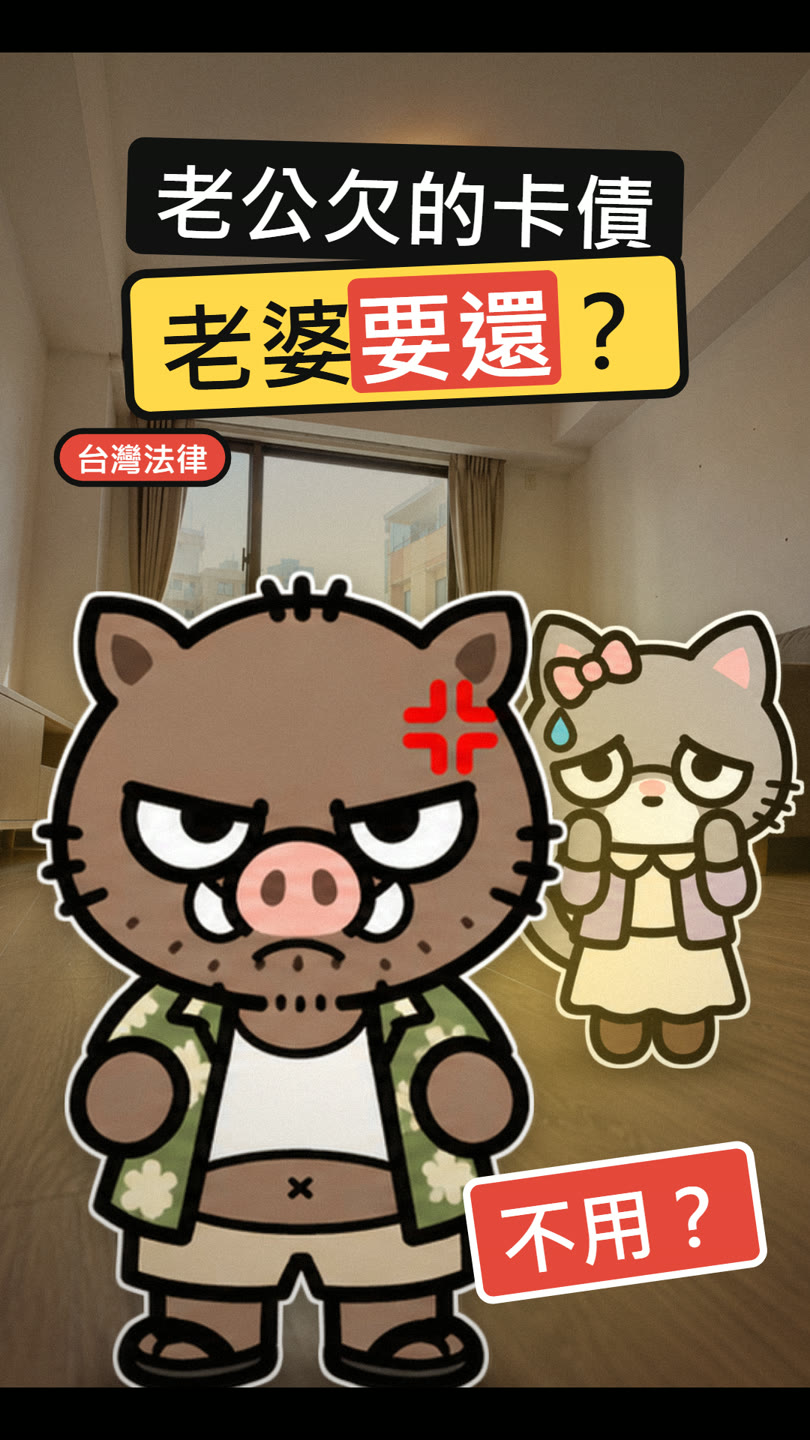
Your husband has credit card debt, and a collector calls you saying married couples share property, so if he does not pay, you must. In Taiwan, a couple with no special agreement is under the statutory property regime: each owns their own property and pays their own debts, and the bank cannot seize your savings for his debt. Only two exceptions make you liable: you signed as his guarantor, or the debt came from household living expenses. Harassment or threats from collectors: call the police.
01Step 1: check which property regime you are under
Civil Code Article 1005: if a couple has not chosen a regime by contract, the statutory regime applies. No agreed regime (community or separate property) registered at the court means the statutory regime.
- Under the statutory regime, each spouse's property, before and during the marriage, belongs to that spouse (Civil Code Article 1017).
- Each spouse pays their own debts (Civil Code Article 1023(1)): whoever owes it, pays it.
02Debts you do not have to pay
- Credit card debt and personal loans in his own name.
- Online instalment plans.
- Investment or gambling debts.
These are his personal debts. Creditors cannot seize your savings or salary, or take your home to pay them.
03Debts you do have to pay: two exceptions
- Exception 1: you signed as guarantor or co-borrower. That is your own contract, so you are liable.
- Exception 2: debts from household living expenses, such as rent, utilities, children's tuition and family medical costs; spouses are jointly liable (Civil Code Article 1003-1(2)).
04Harassed by collectors: record, report, complain
- Keep call recordings and message screenshots.
- Threats, blocking your door, scenes at your workplace: call 110 or report at a police station (Criminal Code Article 304 coercion, Article 305 intimidation).
- Problems with a bank's outsourced collectors: complain to the Financial Ombudsman Institution, 0800-789-885.
- Financial Ombudsman Institution (0800-789-885) — Complaints about bank-outsourced collectors
- National Police Agency (emergency 110) — Report threats, coercion, blocking your door
05Protecting yourself: register separate property
A couple can agree to switch to the separate property regime and register it at the court, which makes things clearer to outsiders.
- Judicial Yuan — Marital property regime registration
06Where to ask
- Legal Aid Foundation, 412-8518.
- Free legal consultations run by each city or county government.
07Things to watch
- If you registered the community property regime, different rules apply and community property may be used for debts; get separate advice.
- Divorce does not cancel a guarantee you signed.
- Money borrowed in your name for his use (for example, you take a personal loan and transfer it to him) is your own debt.
- Collectors may not use threats or coercion; keep the evidence and call the police when needed.
Sources
What should we explain next?
Every reel has a full guide. Follow @lawbao.tw and check here first before you decide whether you need a lawyer.

TrialAI
Want to know how your case would go?
TrialAI runs an AI mock trial and predicts the outcome. Describe your situation and see your odds before you decide what to do next.